


Extreme weather no longer waits politely outside the boardroom door. A climate and energy analysis shows that about 74% of the extreme events examined became more likely or severe because of climate change. That shift turns headlines about record heat, flash floods and unseasonal storms into hard-edge business risks.
Disasters now threaten revenue, assets and people with little warning. Supply chains stall, insurance deductibles jump and regulators sharpen their focus. If you still treat natural hazards as rare anomalies, you are overlooking recurring stress tests for your strategy.
According to the USGS, warmer air and oceans pack storms with extra energy. More vapor fuels heavier rain, hotter seas drive higher winds and rising water erodes coastal facilities. Every trend tightens the link between climate physics and balance-sheet volatility.
Boards ask for clearer answers on climate risk corporate planning, investors demand disclosure and frontline managers want tools that protect people. This blog shows how you can meet those demands by weaving natural disaster risk assessment, enterprise resilience and operational readiness into one adaptive framework.
The first step is understanding why yesterday’s playbooks fail.
Recognizing Why Natural Disasters No Longer Follow Old Patterns
A decade ago, many companies built hurricane or flood plans on neat probability curves derived from long climate records. Those curves are bending. The Intergovernmental Panel on Climate Change reports that “human-induced greenhouse gas emissions have led to an increased frequency and intensity of some weather and climate extremes”. When science upgrades its language from possibility to established fact, you must update your playbooks just as decisively.
The same report underscores the stakes: “Some recent hot extreme events would have been extremely unlikely to occur without human influence on the climate system.” Accepting that reality shifts extreme weather from background worry to central business issue.
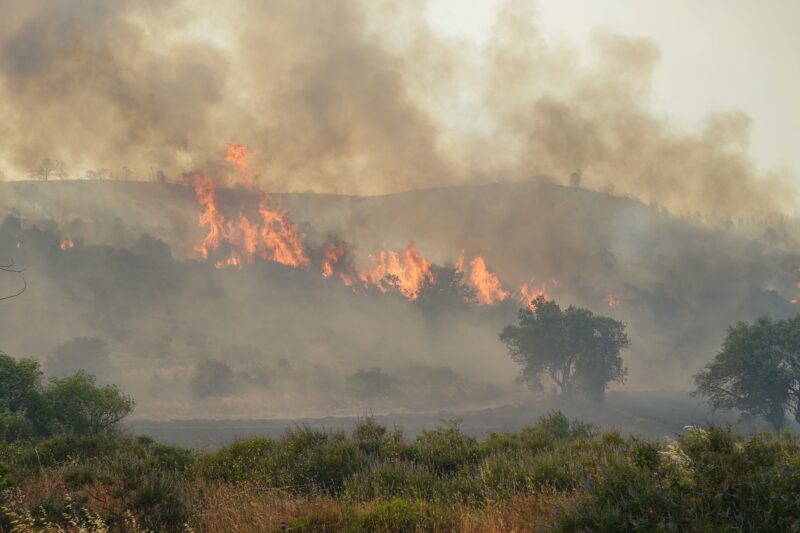
Rising volatility now shapes capex, insurance and workforce safety. Storms intensify overnight, wildfires jump containment lines and heat waves linger for weeks. If your operations depend on stable output and reliable market access, extreme weather is already a core concern.
Understanding the Shift to a Non-Stationary Risk Environment
A non-stationary climate means the baseline itself is moving; yesterday’s “hundred-year” flood might look more like a 20-year event tomorrow. According to the IPCC, even a half-degree Celsius of additional warming triggers statistically significant changes in extreme precipitation, cyclone behavior and regional drought patterns. Events once dismissed as too rare become plausible at any facility, asset or supply-chain node.
According to the IPCC, heavy downpours “follow the rate of increase in the maximum amount of moisture that the atmosphere can hold as it warms” and intensify about “7% per 1 °C of global warming.” When the wettest day of the century becomes a twice-a-decade occurrence, you must rethink drainage capacity, emergency stockpiles and design thresholds.
Seeing How Compound Events Magnify Business Risk
Climate volatility rarely strikes in isolation. A stalled tropical system can dump record rain, overwhelm drainage, cut power and strand inbound supplies within hours. These overlapping hazards create cascading failures across finance, operations and reputation. Forecast accuracy still matters, but exposure and vulnerability decide whether your organization maintains safety, continuity and solvency when several threats converge.
Traditional hazard-centric approaches cannot cope with that complexity. You need a broader risk assessment that weighs exposure and vulnerability as heavily as meteorology.
Reframing Corporate Risk Around Exposure and Vulnerability
A solid risk assessment starts with more than weather maps. A U.S. preparedness resource explains that a risk assessment identifies hazards and probes the vulnerabilities that amplify damage. Weak construction, fragile processes or outdated protection systems can turn a routine incident into a disaster.
Regulators and investors expect the same rigor. The Enterprise Risk Management Initiative at NC State offers a structured tool for extreme-weather scenarios that guides you through potential disruptions across revenue, people and supply chains. By tying findings to mitigation strategies, the framework lets you meet disclosure mandates while strengthening resilience.
Assessing Risks Across Assets, Operations and People
Use this four-part lens to reveal where moderate events can spark outsized losses:
Hazard – Identify threats ranging from river floods to grid-straining heat waves
Exposure – Map every asset, process and partner sitting in a hazard’s path
Vulnerability – Evaluate physical hardening, backup systems, data safeguards and workforce readiness
Response capacity – Measure how fast your teams can stabilize operations and protect people
A recent MSCI Institute survey found that more than 80% of companies have already felt operational pain from extreme weather, and those hit once are twice as likely to invest in upgrades. Experience converts awareness into action, but a proactive review prevents the costly first lesson.
Expanding the Review Beyond the Facility Footprint
Hazard lines on a site map tell only half the story. A supplier may depend on a single port exposed to typhoons, remote employees may face heat-driven blackouts and customers can vanish if service falters during wildfires. Effective climate risk corporate planning follows every critical input and output, tracing how disruptions move through logistics, utilities, data centers and customer expectations.
Once you see the full exposure, the next step is building a planning process flexible enough to evolve with shifting threats.
Building a Planning Process That Can Adapt With the Threat
Plans reviewed once a year cannot keep pace with hazards that mutate faster than budgets. The IPCC warns that seemingly low-probability extremes can arrive far more often than records suggest. Adaptive planning must therefore become a living discipline, updated whenever new data, assets or exposures appear.
Prioritizing Critical Functions and Recovery Thresholds
Start by mapping every process that keeps value flowing and people safe, then set the maximum downtime each one can tolerate. This exercise turns broad concern about “weather risk” into concrete targets for backup power, alternate suppliers or evacuation timing. A business impact analysis ranks processes by revenue, regulatory duty, workforce safety and reputation, ensuring you invest where interruption becomes existential.
This approach often uncovers hidden single points of failure: an unprotected data-center cooling loop, a sole-source chemical supplier in a floodplain or a critical workforce cluster in a wildfire zone. Knowing which levers drive disproportionate loss lets you pre-position resources, refine insurance layers and harden infrastructure before forecasts darken.
Using Scenarios, Governance and Update Cycles
Stress-test your strategies against multiple futures instead of betting on a single forecast. Develop scenario families—from slow-burn drought to back-to-back hurricanes—and gauge how each would affect staffing, logistics and cash flow. The IPCC notes that concurrent extremes once seen as extraordinary have become more common, underscoring the value of exercising plans against surprises rather than averages.
Governance closes the loop. Your board should weave climate resilience into enterprise-wide risk appetite, while executives assign clear ownership for monitoring, updating and funding the plan. Quarterly horizon scans tied to capital planning ensure that new facilities, mergers or supply-chain shifts trigger immediate adjustments.
With critical functions ranked, scenarios tested and oversight clear, turn to the controls that blunt damage when forecasts turn red.
Strengthening Preparedness Through Protection, Continuity and Training
Preparedness is a cycle of investment, rehearsal and refinement. When you neglect that cycle, extreme events exploit the weakest link, whether it is an unprotected data hall or a night-shift team that never practiced evacuation.
Hardening Operations Against Extreme Weather Disruption
You can reduce losses through site-specific protections that match local hazards:
- Elevate or seal critical equipment in flood zones and stage modular flood barriers
- Add redundant power and cooling such as generators, battery storage and diverse utility feeds
- Replicate data backups in independent regions and test restoration speeds against recovery targets
- Reinforce roofs, windows and wall systems for higher wind speeds and debris impacts
By aligning safeguards with the hazards most likely to affect each site, business unit and region, you avoid overspending on generic solutions and close the gaps that could derail production or endanger staff.
Training Teams to Respond With Speed and Clarity
Training sharpens decision speed and accuracy. Role-based drills, tabletop exercises and digital modules keep teams fluent in warning protocols, escalation paths and remote-work contingencies. After-action reviews translate each incident into updated procedures, turning lessons into muscle memory.
Here at Sigma7, we integrate training with business continuity planning and crisis-management support, allowing you to rehearse not just evacuation routes but also supplier rerouting, data-center failovers and stakeholder communications. This disciplined practice is faster and cheaper than learning in real time.
Physical hardening and human competence matter, but rapid, informed decisions require one more ingredient: live intelligence.
Turning Risk Intelligence Into Faster Decisions
Visibility is now the decisive currency of resilience. Without timely data, even well-funded plans collapse once a storm track shifts or a wildfire jumps a highway. Faster, data-driven choices rest on systems that combine historical context with real-time insight.
Combining Historical Insight With Real-Time Monitoring
Historical weather trends show seasonal patterns but cannot predict next week’s disruptions to your distribution hub. Combine long-term climatology with continuous hazard monitoring to refine thresholds and act before conditions worsen.
In our S7 ONE platform, we merge live weather data, archives and geospatial alerts into one operational view. As we say, “See the storm coming — before it hits” while real-time monitoring helps you position crews, inventory and communications channels ahead of impact.
Using Alerts and Threat Data to Support Action
Scale matters when hazards spread across regions. In S7 ONE we track more than 20,000 new incidents each month across 159 categories and tie them to your geolocated assets. Customized alerts tell you exactly which facilities, suppliers or travel routes face danger, enabling targeted responses instead of blanket shutdowns that waste time and money.
This connected monitoring moves you from reaction to anticipation. When dashboards light up, your cross-functional teams can launch predefined playbooks, reroute shipments or activate remote work while competitors are still parsing news feeds. Speed and precision safeguard revenue, sustain customer trust and prove that resilience is a strategic advantage, not an emergency cost.
Plan for Volatility Before It Becomes Loss
Climate-driven extremes arrive more often, hit harder and combine in ways that defy yesterday’s odds. In this restless environment, the cost of inaction shows up not only in recovery bills but in lost market share and strategic drift.
Enterprise resilience rests on three commitments:
- Accept uncertainty as a constant, not a temporary anomaly
- Invest early in exposure assessments, adaptive plans and real-time intelligence that shorten decision cycles when every hour counts
- Treat resilience as a competitive edge because stakeholders, insurers and regulators already do
Sigma7 helps you turn those commitments into measurable results. Our climate hazard assessments, S7 ONE platform, and global training programs help you protect people, assets, and performance early.
Ready to move from reactive recovery to proactive resilience? Contact Sigma7 to assess your climate exposure, strengthen your continuity strategy and gain the operational edge you need in a world where volatility is the new normal.


