


What 2026’s disasters reveal about property risk engineering
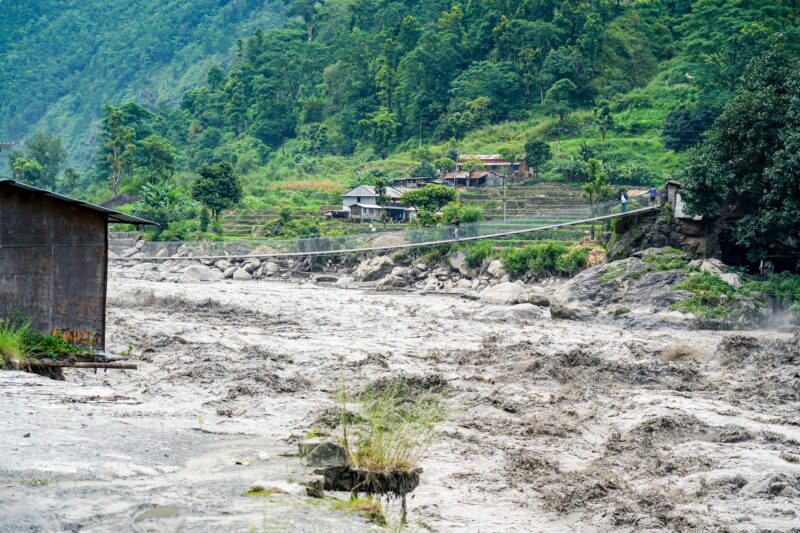
2026 has been a punishing year for communities around the world. Record-breaking heatwaves across Europe, Asia, Africa and North America. Historic wildfires in Spain, France and Indonesia. A devastating double earthquake in Venezuela that claimed thousands of lives. Deadly floods across Nepal, China, the Philippines and beyond. A catastrophic ice-rock avalanche and debris flow at Langtang Lirung in the Himalayas.
Behind every one of these events are people — lives lost, families displaced, and communities left to rebuild. That human toll is the first and most important fact, and no analysis changes it.
But as a global risk engineering firm, we also have a responsibility: to learn from these events so that the next community, the next facility, the next region is better prepared for the forces bearing down on it. Studying how disasters unfold is part of how we help prevent the next one.
The common thread: cascades
Across very different hazards and geographies, one pattern repeats. The event that ultimately controls the loss is rarely the initiating hazard alone — it is the chain of consequences that follows.
How one hazard becomes a catastrophe
Initiating event (slope failure, earthquake, wildfire, extreme rainfall) → secondary hazards (avalanche, debris flow, flooding, fire spread) → infrastructure damage → loss of access and utilities → supply-chain and hydropower interruption → prolonged business interruption.
At Langtang, a high-mountain slope failure became an extremely high-velocity ice-rock avalanche and debris-flow/flood cascade that traveled roughly 100 km downstream. In Venezuela, ground shaking triggered secondary structural and infrastructure failures across a wide area. In Europe’s fire season, heat, drought and vegetation combined to drive blazes far beyond any single property line. Different triggers — the same lesson.
For power generation facilities, data centers, semiconductor plants, manufacturing sites and logistics hubs, physical damage at the insured property is often only one component of the total exposure. The controlling scenario frequently originates far outside the facility boundary.
Our scenario-based approach
At Sigma7 Risk Engineering, this is the type of scenario-based approach we apply when evaluating property risk anywhere in the world:
- Hazard identification beyond the property line — upstream watersheds, unstable slopes, seismic and flood sources, wildfire, neighboring occupancies and other external exposures.
- Cascading-event analysis — identifying how one initiating event can create multiple secondary hazards.
- Property Damage / Business Interruption analysis — evaluating not only direct physical damage, but loss of utilities, access, suppliers, critical equipment and production capability.
- Critical infrastructure dependencies — electrical power, water, telecommunications, transportation and other services whose failure may control the ultimate loss.
- Risk mitigation and resilience — engineering controls, physical protection, monitoring, emergency response, redundancy and business-continuity measures.
- Maximum foreseeable loss scenario development — challenging whether the assumed loss scenario truly captures credible combinations of natural-hazard and infrastructure failures.
The property risk engineering question is not simply, “What hazards exist at this site?” It is, “What sequence of events could turn one of those hazards into a major property and business-interruption loss — and what can we do now to prevent or mitigate it?”
That is where comprehensive property risk engineering adds value. Because what we protect is never just property. It is people’s lives and their ability to rebuild them. Contact us to learn more about our climate change analysis and surveys.


