


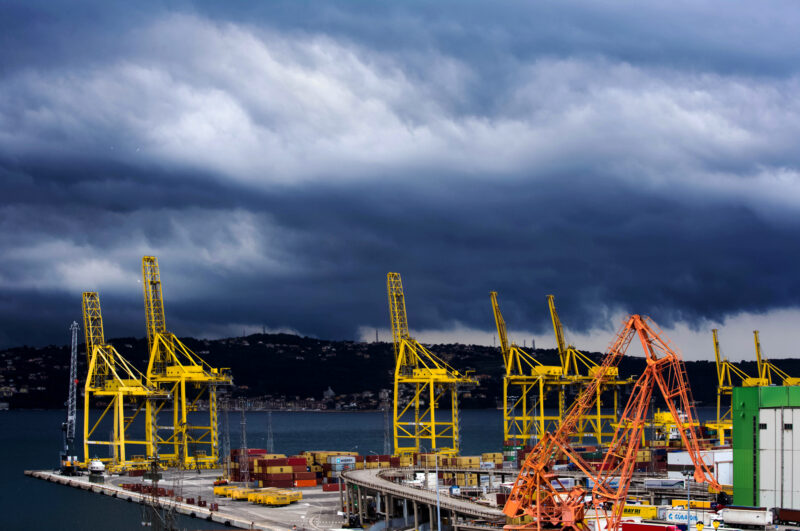
Climate volatility rarely arrives without warning. One season might bring record rainfall that slows port operations while another delivers drought severe enough to idle hydropower plants hundreds of miles away. Each episode can appear isolated until a familiar climate signal, El Niño, enters the picture, reshaping weather patterns and testing operations, supply chains and balance sheets.
Research from a weather intelligence firm shows that El Niño episodes recur every two to seven years and account for roughly one third of all years, underscoring how frequently the signal surfaces and why it belongs in medium-term strategic planning.
According to the International Federation of Accountants (IFAC), climate-related matters can significantly influence companies’ business models, cash flows, financial performance and resiliency, increasing pressure for stronger climate risk disclosure. Understanding how El Niño functions as an early indicator of shifting weather helps organizations convert climate science into actionable risk visibility and decision-ready insights.
Understanding What El Niño Signals for Risk Planning
The El Niño phase of the El Niño-Southern Oscillation (ENSO) occurs when warmer-than-average Pacific sea-surface temperatures alter normal atmospheric circulation. Because the pattern emerges irregularly – often every two to seven years – it supplies risk professionals with an early warning that large-scale weather shifts may soon follow. Roughly one third of all years are El Niño years, so the signal deserves a standing place on any corporate risk dashboard.
Recurring climate phases matter because they offer lead time to question whether rainfall, water availability or storm tracks will diverge from historical baselines and strain operations, logistics or markets. IFAC observes that investors, regulators and policy makers increasingly treat climate change as a material issue with direct financial consequences, expanding expectations for decision-useful climate disclosures.
Defining the Climate Cycle Behind El Niño
El Niño reflects an ocean-atmosphere feedback. Warmer water in the central and eastern Pacific weakens the trade winds that normally push heat westward, tilting the climatic “seesaw” that influences global rainfall belts. Unlike a neutral ENSO state, or its cool-phase counterpart La Niña, El Niño amplifies convection over the eastern Pacific and suppresses it elsewhere. The same trigger can therefore produce floods, heat or dry spells depending on geography and season.
Connecting Climate Signals to Corporate Exposure
When a climate oscillation distorts temperature and precipitation, business impacts follow quickly. Facilities in flood-prone valleys may lose access, utilities that rely on steady hydropower flows can see output throttled and commodity producers must manage swings in water-dependent yields. Insurers, noting loss patterns from past strong El Niño events, may tighten terms or raise deductibles, adding cost pressure.
Risk-intelligence teams track El Niño indicators alongside operational metrics such as supplier lead times, inventory buffers and contract performance clauses. When ocean temperatures breach alert thresholds, analysts stress-test transportation corridors, anticipate price movement in water-sensitive commodities and adjust capital allocation to projects prone to delay. The following section explains how these pathways translate into operational challenges across global supply networks.
Tracing How El Niño Disrupts Business Operations
El Niño rarely produces a single, uniform threat. The warm-phase oscillation redirects atmospheric rivers, suppresses rainfall elsewhere and alters storm tracks, creating patchwork risk: flooding in one region, drought and heat stress in another. Operational disruption often stems from infrastructure stresses such as power outages, damaged roads or shallow waterways rather than from any single hazard.
A sustainability and climate consulting firm reported that extreme heat, drought and flash flooding across China in 2022 curtailed hydropower output, triggered rolling blackouts and forced factory shutdowns. The same event slowed river freight, showing how climate variability can simultaneously strain electricity supply and choke a key transport artery.
Mapping Physical and Infrastructure Disruptions
Prolonged rainfall near coasts can flood industrial zones, while upslope regions face landslides that block access roads. Elsewhere, drought linked to altered jet streams lowers reservoir levels, reducing hydropower capacity and exposing thermal plants to cooling-water constraints. When utilities cut output or switch fuels, voltage stability and production schedules falter, leading to unplanned downtime and higher operating costs.
Shallow rivers strand barges carrying bulk commodities, and dried soils around rail beds raise derailment risk. Localized failures propagate quickly when just-in-time inventories leave little slack to absorb delays.
Mapping Supply Chain and Market Disruptions
Below are four common business disruption channels that tend to accelerate during El Niño phases:
- Supplier interruption – crop failures, mining delays or plant outages that cut raw-material availability
- Transport chokepoints – diminished water levels, flood-damaged roads or weather-related port closures
- Commodity volatility – rapid price swings for agricultural goods, energy feedstocks or water-intensive minerals
- Workforce or community impacts – health and safety concerns, displacement or infrastructure loss that reduce labor availability
Extreme weather often disrupts freight transportation across supply chains, forcing firms to reroute cargo and extend delivery times – delays that cascade to manufacturers waiting on just-in-sequence components.
The next section examines which regions and sectors face the greatest sensitivity to these disruption pathways and where monitoring and mitigation resources deliver the highest return.
Identifying Where Exposure Often Concentrates
El Niño risk is not evenly distributed. Exposure depends on geography, infrastructure dependence, commodity inputs and sector operating models. Vulnerability often becomes visible at the intersection of asset location, supplier clustering and local water or transport conditions.
Assessing Regional Variability in El Niño Impacts
Along the Pacific coasts of the Americas, El Niño frequently increases rainfall, heightening flood risk for ports, mining districts and agribusiness hubs. In contrast, parts of Southeast Asia, India and northern Australia tend to face drier conditions that restrict hydropower output and stress agricultural yields. In sub-Saharan Africa, El Niño-linked droughts have intensified food insecurity and strained regional power grids. These disruptions can affect commodity markets and humanitarian supply chains well beyond the region. Multinational enterprises therefore benefit from viewing El Niño through a portfolio lens instead of assuming a single global impact.
Assessing Industry Sensitivity to Climate Cycles
Manufacturers with minimal inventories may feel early pain when transport corridors flood or river levels drop. Logistics providers see route congestion and higher costs as vessels divert around compromised waterways. Energy producers, especially those reliant on hydropower or cooling-water intakes, grapple with drought-driven shortages and flood-induced infrastructure damage. Mining and agricultural sectors confront reduced output when water tables fall or heavy rains impede extraction and harvest schedules. Food and beverage companies, dependent on crop inputs and clean water, face price volatility and supply uncertainty. Water intensity, route concentration, seasonal demand and asset location all shape sector-level vulnerability.
Organizations that map these dependencies can prioritize adaptive measures more effectively. Actions may include reinforcing flood defenses at coastal terminals and diversifying supplier networks beyond drought-prone regions. The next section outlines how to convert climate-cycle awareness into structured anticipation and action.
Applying Climate Cycles to Anticipate Disruption Earlier
Seasonal outlooks tied to El Niño are probability signals, not guarantees. By blending climate indicators with site-level asset data, supplier maps and financial thresholds, risk teams gain a clearer line of sight to disruption hotspots and can trigger precautionary moves before conditions deteriorate.
Integrating Forecasts With Internal Risk Data
Aligning weather forecasts with scenario results helps identify facilities exposed to flooding and logistics routes vulnerable to disruption. Inventory gaps tied to extended transit delays become easier to spot before they affect operations.
Scenario analysis strengthens these insights. IFAC guidance explains that forward-looking techniques help organizations test how shifts in commodity prices, demand patterns or carbon policies might evolve under different climate pathways. By setting informed assumptions about timing and magnitude, analysts can rank vulnerabilities and estimate business-interruption exposure. This helps direct capital toward sites with the greatest potential impact.
Converting Signals Into Preparedness Actions
- Monitor signals – Track ENSO indices, rainfall projections and hydrological forecasts through reputable meteorological feeds
- Map exposures – Link those signals to asset locations, supplier tiers, utility dependencies and contractual service levels
- Test scenarios – Quantify potential cost, revenue and timeline impacts under varying temperature and precipitation departures
- Update contingency plans – Adjust inventory buffers, reroute shipments, reinforce infrastructure and refine disclosure narratives based on quantified risk
These actions shape continuity playbooks, guide inventory positioning, support alternative routing agreements and elevate the specificity of climate-related financial disclosures. The discipline also helps governance committees evaluate whether existing risk tolerances remain adequate as El Niño probabilities rise.
Using El Niño Analysis to Inform Governance and Reporting
Boards increasingly want climate intelligence that links physical signals to operational exposure, cash-flow risk and resilience investments. Authoritative meteorological data and professional guidance strengthen governance discussions, enhance disclosure quality and build stakeholder confidence.
Linking Operational Signals to Financial Materiality
When El Niño alters rainfall or drought patterns, costs can rise through flood repairs, higher insurance deductibles and overtime labor for rerouted shipments. Revenues may drop if production slows during power curtailments or if commodity prices spike. Shared assumptions between finance, operations and risk teams support a common view of materiality and ensure that climate variables appear in familiar financial metrics.
Supporting Disclosures With Credible Evidence
IFAC emphasizes that investors and regulators want “consistent, comparable, reliable and decision-useful information” to evaluate climate risk, a standard that pushes organizations to ground their reporting in verifiable data and transparent methodologies. Combining meteorological outlooks with scenario results strengthens the credibility of risk assessments. It also helps organizations justify resilience investments with greater confidence.
Turning Climate Signals Into Better Risk Visibility
El Niño is a recurring climate signal that helps organizations anticipate where rainfall surpluses, drought stress or transport constraints may emerge. Integrating that signal with asset data, supply-chain maps and financial thresholds enhances risk visibility and informs proactive investment.
Here at Sigma7, we provide data-driven assessments that connect climate science to operational resilience, business-interruption modeling and threat intelligence. Contact Sigma7 to evaluate your organization’s climate-related exposure, interruption risks and resilience priorities.


