


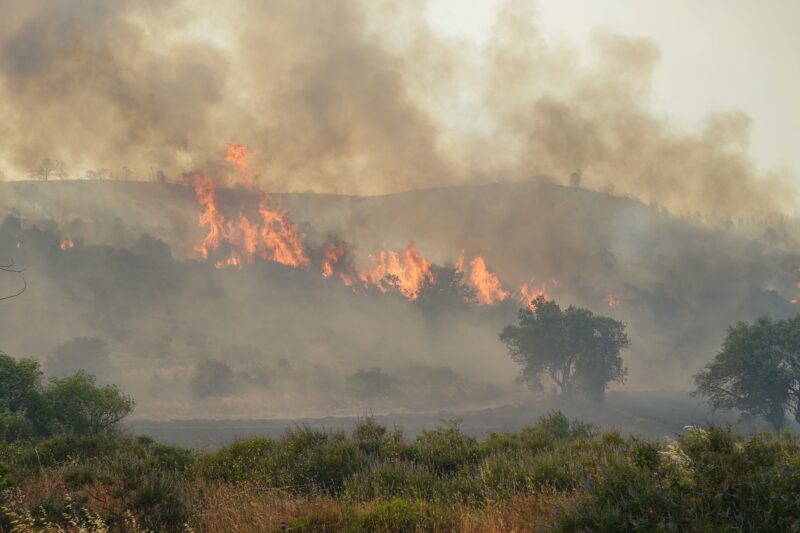
A sprinkler network can gleam under the inspection light, its gauges reading perfectly and tags neatly stamped, yet the same system might falter when heat and smoke push every component to its limits. Across the aisle, another facility’s system looks similar on paper but has been engineered, maintained and stress-tested for the realities of a fast-moving fire. One passes its annual audit; the other proves its worth when seconds matter.
Recognizing this difference is not academic. As the Thomas Jefferson National Accelerator Facility notes in its Fire Protection Manual, “Where applicable, the more restrictive requirement is used.” The line underscores that compliance forms a baseline, not a finish line for risk control and continuity planning.
In this article, you will see why organizations focused on operational, financial and continuity risk often look past minimum NFPA checklists to a broader view of loss prevention. By examining design assumptions, inspection practices and day-to-day operations, you can see how easily a code-compliant installation may still allow avoidable loss.
With that perspective in mind, consider what NFPA compliance actually covers and, more importantly, what it can leave open once real-world variables start to shift.
Defining What NFPA Compliance Covers and What It Leaves Open
Meeting the National Fire Protection Association (NFPA) codes establishes a foundation of legally recognized safety practices for your facility. A risk engineering consultancy analysis notes that the Standard for the Inspection, Testing and Maintenance of Water-Based Fire Protection Systems is the most widely adopted reference for keeping sprinklers serviceable and that many property insurers expect facilities like yours to follow it or an aligned data sheet. The intent is clear: define minimum criteria that, when applied consistently, protect life and limit structural damage.
Code compliance therefore anchors design approvals, permitting and routine inspections. Yet experience shows that a checklist verifying pipe sizes and valve tags cannot guarantee performance when hazards evolve, pressure drops or obstructions accumulate. Your team usually keeps to the code to avoid penalties and to demonstrate due diligence, while risk managers track a different metric altogether – whether suppression, detection and response still align with your facility’s current fire load and business-interruption tolerance.
Separating Baseline Compliance From Broader Loss Prevention
Your facility’s compliance story is usually written through adopted codes, stamped drawings and inspection reports. Loss prevention, by contrast, is measured through reliability metrics like system uptime, response effectiveness and the ability to resume operations quickly after an incident. Your logistics hub can show flawless paperwork yet rely on pumps sized for a commodity mix that changed years ago. Likewise, your manufacturing line may pass its annual inspection even though recent layout shifts now block sprinkler discharge patterns. These gaps often emerge because maintenance realities, production changes or supply-chain pressures move faster than the original design assumptions.
Operational variables such as staffing levels, water-supply fluctuations and deferred testing compound the risk. When those factors converge, your facility remains compliant on paper while its resilience quietly erodes.
Moving from compliance to true readiness involves a closer look at the external requirements that shape fire protection expectations.
Explaining Why Layered Standards Change the Conversation
Insurers, corporate engineering teams and highly protected risk (HPR) frameworks all introduce criteria that reach beyond the NFPA minimums, especially when property preservation and rapid recovery influence the risk equation. Your facility therefore balances overlapping expectations:
Code compliance – satisfies the authority having jurisdiction and provides the legal baseline for life safety
Property protection – reflects insurer guidance that targets asset value, sprinkler density and post-fire rebuild cost
Business continuity – ties suppression reliability to downtime thresholds and supply-chain obligations
Recognizing these lenses shifts the discussion from passing an inspection to choosing design and engineering strategies that deliver dependable fire performance. The next section explores how those choices start long before the first sprinkler is installed.
Examining How Design Choices Shape Real Fire Performance
Fire protection performance hinges on the logic behind each pipe size, pump curve and detection zone as much as on the hardware itself. Your engineers analyze building use, combustibility, water availability and equipment response times, weaving those inputs into hydraulic calculations that aim to contain a worst-credible fire. Even so, you may notice that environments evolve faster than the blueprints on file, exposing how a once-compliant system can lag behind present-day hazards.
Reax Engineering explains that performance-based fire design applies scientific analysis to each facility, taking into account “the specific characteristics of the building under consideration,” an approach that moves beyond generic checklists. By pairing that specific characteristics of the building perspective with prescriptive code, your team gains a clearer picture of how design decisions translate into real fire behavior.
Assessing Hazard Classification, Storage and Layout Changes
Commodity class, storage height, aisle width, obstructions, ventilation patterns and process chemistry frequently shift over a facility’s life cycle. An ordinary hazard space can become extra-hazard when production switches to higher-energy materials or when storage racks climb toward the roof. Ceiling fans, new conveyors or mezzanine levels may channel heat and smoke away from sprinklers that once had unobstructed discharge paths. Your operations team might reconfigure floor space to meet demand, yet those incremental moves can outpace the engineering review cycle, leaving the original system exposed to flame spread modes it was never meant to confront. The potential result is a fully compliant configuration that nonetheless delivers insufficient density, coverage or activation speed when faced with the updated risk environment.
Evaluating Water Supply, Hydraulic Margin and Redundancy
Water supply reliability represents another decisive factor. Flow rate, residual pressure and duration often dictate whether a suppression system achieves control beyond initial activation. Facilities with high-value equipment or critical processes commonly employ redundant pumps, looped mains and on-site storage to offset single-point failures and municipal pressure dips, reflecting a tolerance for little or no downtime. Jefferson Lab’s criteria, for instance, emphasize water grids designed to continue meeting demand after any single component outage, illustrating how site-specific expectations may exceed baseline code requirements.
Many property risk programs also introduce hydraulic margins of at least ten percent above calculated demand to account for future degradation, corrosion or minor layout changes. These design overlays elevate cost and complexity yet frequently align better with the long-term resilience and continuity objectives that NFPA alone does not guarantee.
The conversation now shifts from design theory to the practicalities of inspection, testing and maintenance, where readiness can diverge sharply from the status of an inspection tag.
Analyzing Why Inspection Passing and Readiness Are Not the Same
Passing an inspection confirms that key checkpoints have been documented. Those snapshots, however, rarely capture pressure fluctuations, human error or component fatigue. These factors often emerge under real fire conditions, particularly when flames breach initial containment.
Recent updates to NFPA 25 reinforce that property owners are responsible for inspection, testing, maintenance and impairment management. The guidance highlights that system reliability depends on more than an annual tag attached to a valve. Many organizations recognize the gap between documented compliance and operational readiness only after a failure occurs. A pump may stall, a valve may stick or a record gap may delay troubleshooting when time matters most.
Reviewing Inspection, Testing and Maintenance as Ongoing Reliability Work
NFPA 25 defines inspection, testing and maintenance (ITM) frequencies for everything from weekly pump runs to annual flow tests, mapping out how regular verification translates into dependable suppression when water is urgently needed. A risk management brief from a major insurer shows that items such as pump room checks, diesel engine runs and full-flow performance tests follow weekly, monthly or annual cycles, reinforcing that inspection is a continuum rather than a one-time event weekly pump runs.
Leading into that cadence, consider four illustrative activities that keep your system ready, not just compliant:
- Weekly fire pump churns confirm the driver starts promptly and reaches expected speed, preserving initial pressure when sprinklers open
- Monthly valve walkthroughs verify positions and tamper seals, reducing the odds of an undetected closed valve during an alarm
- Quarterly alarm-device tests check detection loops and notification circuits so occupants receive timely warnings
- Annual full-flow pump tests measure actual discharge against design curves, revealing hidden degradation before it erodes suppression effectiveness
Understanding Documentation, Qualified Personnel and Impairment Management
Here at Sigma7, in our update on the 2025 edition of NFPA 13, we observe that “the documentation required by NFPA 13 is essential to properly conducting ITM on a sprinkler system,” and we add that missing drawings often make evaluations difficult and expensive for owners. Equally important is the caliber of the people interpreting those records; NFPA 25 clarifies that inspection, testing and maintenance be handled by qualified personnel certified or licensed for the task.
A common scenario involves a control valve taken out of service for a weekend project, left unreported and undiscovered until a subsequent incident exposes the blind spot, highlighting how unmanaged impairments, not code deficiencies, often dictate loss severity.
By looking beyond the green tag to the broader ecosystem of documentation, expertise and impairment control, organizations can begin closing the readiness gap. The next step is to examine how everyday operations influence risk. Activities such as hot work and housekeeping can still drive loss, even when every inspection record appears complete.
Identifying Operational Gaps That Increase Loss Even in Compliant Sites
Fire loss prevention extends beyond fixed systems to include hot-work controls, housekeeping, training, supervision and response coordination. Losses often result from the interaction between ignition sources, combustible loading and operational decisions rather than a single compliance failure.
Connecting Human Practices to Fire Outcomes
Live-fire drills, contractor oversight, hot-work permitting and cross-functional coordination usually dictate how smoothly a response unfolds under stress.
When employees practice only evacuation routes, they may miss other critical response actions. Coordinated sprinkler riser isolation and manual pump start-ups often receive less attention. Once smoke enters production areas, those missed steps can cost valuable minutes. A site may document every quarterly drill in a spreadsheet. However, confidence can be misleading if exercises never simulate power loss, communication failures or simultaneous hazards. Untested weak points may remain hidden until a real incident occurs.
Consider a facility that maintains meticulous compliance files while relying on rotating contractors for maintenance shutdowns. If those vendors bypass the hot-work permit process to save time, sparks from a grinder can ignite nearby packaging and overwhelm sprinklers sized for a different hazard profile. The facility remains technically compliant, but the gap between procedure and practice amplifies loss potential.
Linking Common Operational Exposures to Business Impact
Hot work, temporary system impairments, evolving material inventories and maintenance backlogs routinely drive property damage, downtime and supply-chain disruption.
Recognizing these operational drivers encourages you to probe whether existing controls reflect current realities or simply satisfy inspection queries. The next section offers a framework for evaluating protection maturity beyond minimum thresholds.
Framing a More Complete View of Fire Protection Maturity
Many organizations evaluate fire protection maturity through several overlapping lenses. They assess how closely current hazards align with the original design basis. They also examine whether suppression equipment remains reliable under degraded conditions. The review extends to operational performance. Organizations consider how consistently teams follow documented procedures and how quickly recovery actions restore production after a disruption. This broader perspective complements NFPA compliance rather than replacing it. It helps determine whether protection levels truly reflect asset value, hazard complexity and business continuity expectations.
Industry commentary suggests that insurers often look beyond basic NFPA benchmarks. They may compare water-based system inspection records with business interruption models to assess overall risk exposure. Those comparisons help determine whether additional safeguards are warranted. That layered scrutiny shows how a single standard rarely answers every performance question on its own.
Using Performance Questions to Test Protection Assumptions
Facilities that routinely stress-test their assumptions tend to start with simple but revealing inquiries:
- Do the commodities, storage heights and process layouts present today still fit the hazard classification used in the original hydraulic calculations?
- Are impairments surfaced fast enough for decision-makers to weigh risk versus production deadlines in real time?
- Does the current inspection cadence include realistic simulations, such as manual pump starts during power loss, that mirror how the site would actually react to fire?
- Are updated drawings, valve lists and flow test curves stored in a place where maintenance staff and outside responders can access them within minutes?
Answering these questions often uncovers hidden gaps before they translate into smoke and downtime. For example, a distribution center recently added high-density automated storage but retained a sprinkler design optimized for lighter loads. A quick review of design intent against current hazards identified the mismatch early. That finding allowed recalculations and pump resizing during a planned outage rather than an emergency shutdown.
Viewing Fire Protection as Part of Resilience Planning
Fire protection also intersects with broader resilience and business-continuity strategies. When suppression capability is integrated with contingency logistics, alternate power, data recovery and supply-chain rerouting, organizations are better positioned to protect earnings and market commitments. That protection often holds even when a localized incident disrupts a single production line. Property insurers frequently evaluate these interconnected controls alongside NFPA records when assessing loss expectancies. This reinforces a key point: technical compliance, operational discipline and recovery planning all contribute to sustained performance under adverse conditions.
The next section distills these insights into a final takeaway, outlining how leaders typically move from bare-minimum readiness toward a standard that aligns with real-world loss-prevention goals.
Raising the Standard Beyond Bare-Minimum Readiness
Leaders concerned with loss prevention typically view NFPA compliance as the first rung on a much taller ladder. A system that meets code yet lacks redundant water supplies, accurate drawings or practiced response teams often delivers a false sense of security. Moving higher on that ladder involves asking whether protection, maintenance and human factors together create dependable performance under stress.
In our documentation cabinet update on the 2025 edition of NFPA 13, we note that “the documentation required by NFPA 13 is essential to properly conducting ITM on a sprinkler system.” That observation underscores a broader reality. Readiness depends on the integration of hardware, documentation and expertise.
Ultimately, NFPA standards establish essential life-safety fundamentals. Genuine loss prevention, however, requires more than compliance. Organizations achieve stronger outcomes when design intent, ongoing verification, disciplined operations and recovery planning work together. Those efforts should remain aligned with asset value and the potential consequences of downtime.
Here at Sigma7, we help clients connect these pieces so fire protection systems perform when it matters most. To explore how your current strategy aligns with performance, resilience and loss-prevention goals, contact Sigma7.


