


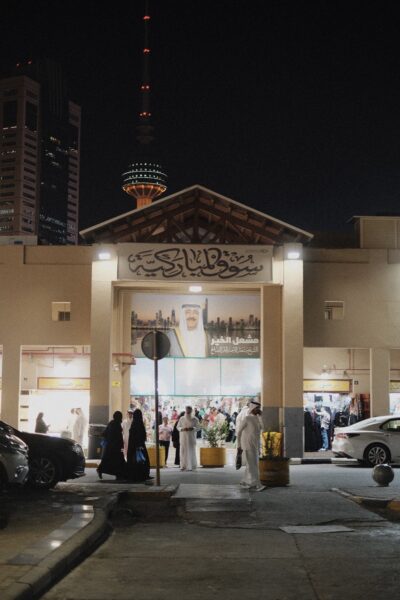
Kuwait: an anomaly in the Gulf?
Of all the countries in the Gulf, Kuwait seems to command the least international attention. It is dwarfed in size by Saudi Arabia, in post-oil development by the Emirates. Kuwait’s political and diplomatic might is inferior to Qatar, its tourism infrastructure less developed than Oman, and there’s no Grand Prix putting it on the map like Bahrain.
Yet behind its low profile, Kuwait boasts the oldest sovereign wealth fund and the world’s strongest currency. It has the most legitimate claim to democracy and free speech in the Gulf, and a long history of political activism. Among Arabs, Kuwait is often celebrated as the pinnacle of traditional Gulf culture, representing the last vestiges of a heritage since influenced by the vast revenues of the oil and gas boom.
Indeed, Kuwait’s oil and gas wealth is perhaps less obvious than that of its neighbours in Saudi Arabia, the Emirates, and Qatar. Record-grabbing skyscrapers are noticeably absent, and developments remain punctuated by empty land plots, reminders of the Iraqi invasion in the 1990s.
But the signs of oil and gas revenues are still there. During our visit to Kuwait, one accountant joked that Kuwaitis love to travel and rarely spend time in their homeland; an affordable luxury in a country where most citizens are eligible to draw a full pension from the age of 50. For Kuwait’s younger generations, generous scholarships mean that fully funded international study is feasible for most students. For the time Kuwaitis do spend at home, Kuwait City abounds with coffee shops and malls, catering to two of the country’s most popular pastimes. The Avenues Mall takes the top spot as the country’s largest shopping centre, boasting thousands of stores and the world’s most expensive brands. Even Vogue describes the Kuwaiti luxury goods market as punching well above its weight, adding that it is often overlooked in the region. And as for its café culture, we had some of our best coffee in the most peculiar setting. By Mesillah Beach, we arrived at a café housed in a redeveloped petrol station, with tables spread across the dusty forecourt and in between the pumps.
So while countries like Saudi Arabia push on with futuristic entertainment projects, Kuwait has chosen conservatism over cosmopolitanism, quietly favouring its traditions and heritage. Unlike Dubai, the port is filled with dhows not glitzy yachts. Even Saudi Arabia, which has long been perceived as the most conservative of the Gulf states, has recently relaxed restrictions on alcohol to attract tourists, while laws remain steadfast in Kuwait. There is a sense that Kuwait is yet to decide how it will leverage its oil and gas wealth.
From a geopolitical standpoint, Kuwait also stands out for its precarious position at the tip of the Arabian Gulf. More so than its neighbours, the country is deeply exposed to regional fault lines. You could reach Iraq, Iran, and Saudi Arabia in little over an hour by car from Kuwait City, proof of Kuwait’s important role as both a bridge and a buffer in a volatile region. Indeed, last year’s missile strikes between Israel and Iran were visible from the capital city. And despite its historical neutrality, Kuwait’s proximity to Iran was enough to spook its residents during the recent Twelve Day War, especially when an American airbase in Qatar was hit. Across several conversations, observers suggested that Kuwait could have easily been an alternative target, given the US military presence in the country.
In terms of domestic politics, Kuwait again shuns regional norms, functioning with a hybrid system of government that comprises a constitutional monarchy and a democratically elected parliament. Historically, this has promoted cooperation amongst Kuwait’s many tribes, enabled representation of the country’s diverse sects (its Shia population is proportionately among the highest in the Gulf), and encouraged political and monarchical accountability. All of this sits atop a demographic reality in which expatriate workers far outnumber citizens, and the economy depends heavily on migrant labour to keep everyday life and key sectors running. But a full-blown democracy Kuwait is not, with the Emir maintaining the power to suspend parliamentary, an authority that has been exercised multiple times throughout history, most recently in May 2024. Observers have since commented that Kuwait now risks pushing the needle in the opposite direction and slipping into autocracy.
The most obvious sign is the widespread revocations of Kuwaiti nationality in a scheme that began by targeting individuals perceived to have obtained citizenship fraudulently, but has since grown to encompass those who were born in Kuwait to Kuwaiti parents. Current estimates indicate that 16% of the citizen population has been affected by what commentators now view as a selective tool to silence oppositionists and specific tribal factions, leaving thousands stateless. Even diplomats are not immune, as the current Kuwaiti ambassador to the UK was stripped of his citizenship last month. Still, analysts agree that this hybrid system — democracy mixed with autocracy — set Kuwait apart politically within the GCC.
So what next for a country caught between competing geopolitical currents and navigating its status as a democracy, all whilst overseeing billions in oil and gas revenues? From conversations across the board with academics, bankers, oil and gas executives, and diplomats, the messaging was clear: Kuwait’s potential is undeniable, and there is genuine appetite for change. The question is whether the country will translate that intent into reforms that begin to reshape its more entrenched ways of operating, or continue to lean on the comfort of familiar arrangements. As Kuwait regularly slips under the radar, what remains to be seen is whether this country of great contradictions will make the world look up and pay attention.
By Madeleine Glass, Sigma7 Business Intelligence


