


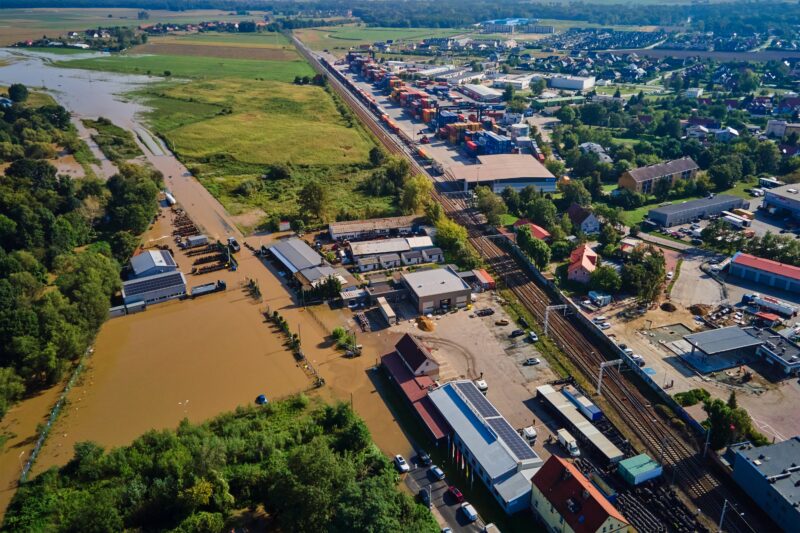
Natural disaster risk now sits on board agendas alongside cyber threats and geopolitical volatility. Wildfires, floods and heat waves can halt production, idle workforces and sever critical links in minutes. When damage mounts by the hour, directors increasingly treat natural hazards as strategic issues, not seasonal anomalies.
According to Bank of America, “every dollar invested in resilience and preparedness saves $13 in post-disaster damage.” Yet its analysis shows that only a fraction of firms rehearse crisis response or maintain robust continuity plans.
Thomson Reuters reports that “supply chain management has emerged as the dominant strategic priority” for 68% of trade professionals, a sign that the conversation has shifted from chasing marginal cost savings to building systemic resilience.
The gap between threat and readiness grows as climate extremes intensify. You may juggle business interruption risk, supply chain disruption and operational resilience in the same breath, knowing that a single storm can ripple across partners and customers worldwide. Faced with that reality, many teams are broadening disaster planning to the enterprise level. The sections that follow explore how and why.
Recognizing Why Natural Disasters Now Demand an Enterprise Risk Response
Volatile climate patterns, dense industrial hubs and globally networked supply chains have combined to push natural disaster risk onto the same strategic plane as cyber intrusions and geopolitical shocks. Boards now review hazard maps next to currency exposures and regulatory filings. This is due to storm tracks, wildfire zones and seismic faults often overlap with highest-value assets. When several facilities share common utilities or depend on a handful of critical suppliers, the margin for disruption narrows and the cost of inaction widens.
At the same time, climate volatility magnifies the odds that local events cascade across regions. A single hurricane can interrupt data centers in one state, close ports two time zones away and leave retailers on another continent scrambling for inventory. Asset concentration intensifies that threat: production clusters, shared logistics corridors and lean inventories create tight couplings that amplify even modest shocks. By understanding these hidden interdependencies before the forecast track turns your way, you position your organization to respond with speed and confidence.
Connecting Physical Events to Business Impact
Storms, floods, wildfires and earthquakes rarely confine themselves to the damage line on a property insurance claim. They can sever power, destroy transit links, displace employees and stall customer service, turning broken infrastructure into lost revenue within hours. Peer-reviewed research in the International Journal of Disaster Risk Reduction shows that when hazards disrupt manufacturing supply chains, national payroll, gross domestic product (GDP) and employment can fall by 5.3%, 3.9% and 3.0% respectively, and the resulting compound supply chain effects often outweigh direct physical losses in the impact zone compound supply chain effects.
Those figures match what many leaders experience on the ground. A flooded supplier can idle an assembly line hundreds of miles away, while a regional blackout can knock out both on-premise servers and remote collaboration platforms, delaying product launches or regulatory filings. Even when your facilities escape physical harm, you may face weeks of business interruption risk while logistics partners, utilities and cloud providers restore their own operations.
Reframing Resilience as an Operational Priority
Given the potential fallout, operational resilience is best treated as a shared capability that links risk management, continuity planning, finance, procurement and executive decision-making. Official government preparedness guidance explains that comprehensive emergency planning should cover communications, information technology recovery and continuity measures. Embedding those disciplines in everyday governance shifts the mindset from “if” to “when” and lets you allocate resources at the pace of emerging threats.
Here at Sigma7, we see the most durable programs assign clear ownership, align budgets with impact tolerance and use scenario analysis to guide capital spending. By integrating hazard intelligence into routine planning cycles, you strengthen the connective tissue – people, processes and data – that keeps operations moving even when the weather, the market or the power grid doesn’t.
Understanding Where Natural Disaster Risk Hits Business Operations Hardest
Impact analysis often stops at property damage, yet the steepest losses usually appear in disrupted workflows, delayed orders and extended recovery timelines. When production targets slip or service levels fall, downstream effects multiply across finance, compliance and brand perception.
A facility closure can freeze assembly lines, but the fallout often spreads to remote teams that rely on the same network connections or power feeds. Power outages can sever cloud access, while damaged cell towers slow incident response and lengthen customer wait times. Many organizations only uncover these hidden dependencies during a severe weather event, realizing that backup systems, remote-work processes and local infrastructure share single points of failure.
Assessing Facility, Workforce and Technology Disruptions
Site shutdowns, workforce displacement and communications blackouts can stall production and delay service commitments. Even with redundant power or mirrored data centers, operations may still slow when employees cannot reach safe work locations. Water and fuel shortages can also disrupt critical utilities. Researchers Thomas and Helgeson found that such operational pauses can shave nearly 3% off employment in affected sectors, underscoring how physical hazards trigger wider economic slowdowns.
Teams often identify additional weak points only after disruption occurs. These may include shared telecom ducts, overloaded generators, or remote workflows that fail during internet outages. Documenting these interlocks now lets you stage mobile power, pre-approve alternate work sites and reprioritize tasks that keep revenue flowing.
Evaluating Financial, Regulatory and Reputation Effects
Beyond operational slowdowns, natural disaster risk can trigger compliance delays, missed contract milestones and heightened investor scrutiny. Bank of America warns that “only 20% of businesses are equipped to handle the impacts of extreme weather,” highlighting just how wide the preparedness gap remains. Its analysis also shows that while preparedness spending pays for itself many times over, most firms don’t test response plans regularly, leaving balance sheets exposed when claims, penalties or lost sales begin to mount.
Key impact categories include:
Operational: Downtime erodes production volumes and extends customer lead times
Financial: Emergency expenditures, uninsured losses and cash-flow gaps strain liquidity
Regulatory: Deferred filings or safety breaches invite fines and increased oversight
Reputational: Service failures and supply shortages chip away at customer loyalty and brand equity
When these pressures converge, recovery costs skyrocket and management attention diverts from growth initiatives to crisis containment. This realization points to a vulnerability that extends far beyond your four walls: the supply chain links that sustain day-to-day operations but lie outside your immediate control.
Reducing Supply Chain Disruption Before It Becomes a Crisis
Supply chains built for just-in-time efficiency now operate in a world where a single weather alert can reverberate across continents. According to Thomson Reuters, “supply chain management has emerged as the dominant strategic priority” for 68% of trade professionals, a figure nearly double the previous year. The warning underscores how leaders are shifting focus from marginal cost savings to resilience and adaptability.
Organizations often underestimate how multi-tier dependencies will react when a regional hazard simultaneously stalls inventory flow, blocks transport routes and leaves key suppliers offline. Without visibility beyond tier-one suppliers, organizations may overlook shared flood zones or congested ports until shipments are disrupted.
Identifying Critical Supplier and Logistics Dependencies
Robust mapping often begins with direct suppliers but may not end there. Organizations may seek visibility into sub-tier relationships, including situations where a small number of component makers dominate critical parts, chemicals or data services. Hazard overlays can identify whether those nodes are concentrated near earthquake faults, storm tracks or political flashpoints. Chokepoint analysis may reveal exposure tied to single docks, rail spurs, bridges or canals that, if disrupted, could trap inventory in transit.
Inventory dependencies may also warrant detailed review. Safety stocks stored in the same region as production plants can expose both facilities and spare parts to the same threats. Reliance on time-definite airfreight for high-value goods may increase exposure to airport closures. Substitution constraints can also shape risk. Although a material may be technically replaceable, qualification testing, regulatory approvals or intellectual-property limitations can extend lead times.
Following the mapping process, suppliers, routes and inventory nodes may be assessed according to criticality, recovery time and cost of delay. This type of triage can help identify where diversification, dual sourcing, spot contracts or consignment inventory may deliver the greatest impact. Sharing findings with tier-one partners may also support joint improvement plans aimed at reducing risk across the network.
Strengthening Contingency Options Across the Network
Resilient networks rarely rely on single points of failure. Companies often diversify sourcing, validate backup carriers, pre-position inventory and embed clear communication protocols with vendors. Government preparedness guidance emphasizes coordinated communication and continuity actions. These principles apply to external partners as much as internal teams.
Consider how a sudden rail terminal closure can ripple outward. Raw materials miss their delivery window, procurement chases emergency trucking, production schedules slip and customer commitments require costly airfreight. By rehearsing these scenarios and aligning contingency budgets in advance, you transform hazard alerts into predefined triggers instead of last-minute scrambles.
With visibility improved and contingency levers in place, attention turns to the internal capabilities your workforce needs to absorb shocks and accelerate recovery.
Building Operational Resilience Into Everyday Decision-Making
Operational resilience is your organization’s capacity to keep critical services running under stress. It isn’t a binder that sits on a shelf; it’s a discipline woven into budgeting, staffing and capital planning so facilities, data and supply chains can flex when hazards strike.
Aligning Risk, Continuity and Response Functions
Programs perform best when enterprise risk management, crisis management, business continuity and facilities planning move in concert. Government preparedness guidance emphasizes linking communications, IT recovery, and operational planning across the enterprise. This alignment helps prevent siloed responses during disruption. Clear ownership, shared metrics, and rapid escalation paths improve coordination across finance, procurement, and facilities teams. This alignment supports faster decisions during disruption.
Testing Plans Against Realistic Disaster Scenarios
Exercises bring plans to life. A well-designed program layers tabletop discussions, functional drills and full-scale simulations. Start with clear objectives that stress core assumptions about recovery times, data availability and vendor capacity. Inject communications outages to see how quickly teams switch to alternate channels such as radio or satellite phones. Rotate leadership roles so deputies practice decision-making when primary managers are unreachable. Measure response times, staffing adequacy and resource burn rates against predefined thresholds.
Post-exercise debriefs convert findings into action. Gaps in satellite-phone access, outdated contact lists or mismatched generator capacity become tracked remediation items with budgets and deadlines. Assign owners, set target dates and monitor completion to ensure shortcomings don’t linger. By repeating exercises annually and adding compound scenarios, organizations maintain a learning loop aligned with evolving threats and business priorities.
These drills also illuminate the data requirements, cross-functional dashboards and real-time alerts that form the backbone of proactive decision-making.
Using Data and Scenario Planning to Stay Ahead of Emerging Threats
Historical averages no longer capture the pace or shape of today’s natural hazards. Rainfall patterns shift within a decade, wildfire seasons lengthen and coastal storms intensify outside their traditional windows. When change accelerates this quickly, risk visibility becomes as critical as physical hardening. It also helps organizations position assets, people, and capital before disruption escalates.
Improving Risk Intelligence With Better Monitoring
Modern programs combine internal production metrics with external hazard intelligence, weather feeds, and geopolitical context. This creates a live view of operational exposure and emerging risk. Here at Sigma7, our threat-intelligence platform brings millions of geolocated incident reports into one dashboard, giving supply-chain, facilities and security teams a common operating picture. With timely insight, you can decide when to initiate orderly shutdowns, reroute critical shipments or activate employee-safety protocols before conditions deteriorate.
Turning Scenarios Into Strategic Decisions
Scenario planning earns its keep when it converts probabilities into concrete choices. Organizations often build libraries of plausible hazard events and apply financial modeling to compare revenue, recovery costs, and market impact. Present executives with clear options: invest in secondary production lines, negotiate parametric insurance triggers or accept residual risk within a captive.
Research from Thomas and Helgeson shows supply-chain ripple effects can reduce national payrolls by more than 5%. These findings help leadership compare mitigation investments against potential revenue losses.
Finally, translate insights into measurable indicators such as recovery time objectives, supplier concentration ratios and service-restoration targets. Tracking these metrics helps boards monitor progress, redirect funds when thresholds slip and prove that resilience investments are delivering business results.
With monitoring, metrics, and agile scenario libraries in place, organizations can turn emerging risks into informed action and resilience.
Turning Natural Disaster Risk Into a Stronger Resilience Strategy
Boards that treat natural disaster risk as a recurring operational issue – not a one-time emergency – tend to rebound faster and capture market share while competitors scramble. Here at Sigma7, we’ve seen downtime costs average half a million dollars per hour, yet organizations that weave hazard intelligence, continuity planning and supply chain visibility into everyday decisions usually avoid the worst of those losses.
The transition is cultural as much as technical. It starts with acknowledging that storms, fires or earthquakes will disrupt strategic goals at some point and that proactive investment yields outsized returns. Scenario analytics support capital planning, while rehearsed playbooks and aligned risk metrics strengthen organizational readiness. The result is a living resilience program that adapts to new climate data, market shifts and growth plans.
If you want to turn natural disaster risk into a competitive advantage, our team is ready to help. Contact Sigma7 to schedule a tailored risk assessment or explore how our risk engineering, business continuity and threat-intelligence solutions can keep your operations moving, no matter how volatile the environment becomes.


