


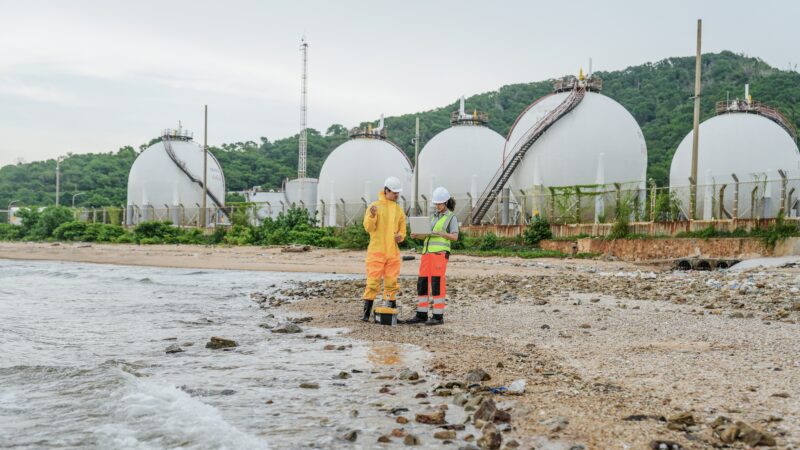
A single hurricane making landfall can shutter factories, sever data links and ground transport corridors in minutes. Within hours the shockwaves can be felt thousands of miles away as suppliers miss deliveries, customers defer orders and cash-flow projections shift. In tightly coupled global markets, the distance between epicenter and balance sheet has all but vanished.
Scale amplifies the stakes. Industry analysis by Aon shows that natural disasters resulted in $368 billion in economic damage in 2024, around 60 percent of which was uninsured. The shortfall underscores how catastrophe losses cascade beyond property repairs, affecting suppliers, customers and entire value chains.
Preparedness, while widespread, doesn’t guarantee immunity. Aon notes that “31% of respondents suffered a loss from this risk in the 12 months prior to the survey”, yet 77 percent had formal response plans in place, underscoring the gap between planning and outcomes.
This blog examines how organizations usually evaluate business interruption risk, supply chain disruption and operational resilience when natural disasters loom. The discussion considers insurance as one tool among many rather than a sole remedy, emphasizing the need for integrated strategies that connect operational, financial and supply-chain data.
Clear terminology is essential before exploring those strategies.
Defining Business Interruption Risk in a Catastrophe Context
Business interruption (BI) risk refers to the loss of income and the additional costs that arise when operations are partially or fully halted. Natural disasters intensify this risk because physical damage, workforce displacement and infrastructure failures can converge, pausing production, sales and service delivery while fixed expenses continue. The direct hit to revenue is immediate; the financial after-effects – contract penalties, market-share erosion and deferred investments – can extend for quarters.
Unlike a property loss that stays within the four walls of a facility, BI is inherently interconnected. A single event can simultaneously affect on-site assets, off-site suppliers, logistics partners and customer commitments, shifting revenue recognition and cash-flow timing. Data from Aon show that despite widespread continuity planning, nearly a third of surveyed organizations still incurred BI losses in the prior year, indicating that risk extends well beyond insured property and into the fabric of day-to-day operations.
Tracing Direct and Indirect Loss Pathways
Natural catastrophes typically set off multiple failure modes that prolong downtime:
- Direct damage – Structural harm to buildings or equipment halts production until repairs are complete.
- Access disruption – Evacuation orders or debris-blocked roads stop employees, contractors and customers from reaching sites.
- Service interruption – Power, water or telecom outages stall critical processes and impede recovery coordination.
- Downstream dependency – Supplier shutdowns or customer cancellations propagate losses through the value chain, magnifying the financial impact.
Connecting Physical Damage to Time-Element Exposure
The distinction between a brief outage and a material earnings event often hinges on the length of downtime, the speed of ramp-up and the durability of revenue streams. Flexible operational planning can shorten recovery, but it isn’t a cure-all. An academic analysis of global supply chains found that purchasing catastrophe insurance without aligning operational tactics may inadvertently encourage decisions – such as positioning more production at vulnerable sites just before a forecasted event – that increase total damage costs. The study underscores how the interaction between insurance and operational planning should be managed holistically to avoid extending the loss period.
Understanding these dynamics is essential because the same forces that idle a plant can ripple outward, disrupting tier-two suppliers, freight schedules and downstream customers.
Mapping How Natural Disasters Disrupt Supply Chains
Hurricanes, floods and wildfires seldom stop at damaging a single site. Inventory in transit, just-in-time production schedules and customer delivery windows all rely on precise timing; once local infrastructure falters, delays propagate through every tier of the network. Globally distributed and lean operating models heighten exposure because upstream and downstream dependencies are often opaque. When visibility ends at the first tier, organizations can be surprised by shortages of sole-source components or by customer bottlenecks that surface only after orders slip.
Identifying Multi-Tier Supplier and Customer Dependencies
The first tier rarely tells the full story. A contract manufacturer may appear resilient, yet still depend on a sub-supplier located in the same hazard zone. Organizations usually map relationships two or three levels deep to uncover:
- Limited substitution options for specialized materials
- Geographic clustering that concentrates risk in one corridor
- High customer concentration that turns a single logistics delay into a revenue shock
- Surge capacity that evaporates quickly once regional demand spikes
Consider a semiconductor assembler that believed its procurement was diversified across several board suppliers. Only after a typhoon halted a shared resin producer did the firm learn all those suppliers drew from the same upstream chemical plant. By the time alternatives were found, available inventory had been allocated elsewhere, extending lead times and eroding margins.
Assessing Infrastructure, Logistics and Regional Ripple Effects
Ports, highways, rail spurs and power grids often sustain more severe damage than the facilities they serve. Even when a plant emerges with minimal harm, impassable roads or a prolonged utility outage can idle production lines and defer shipments. Regional events can also ripple across borders: container backlogs at one coastal hub may force carriers to reroute vessels, tightening capacity on distant trade lanes and delaying inputs for manufacturers far outside the disaster zone.
Effective supply-chain risk analysis therefore extends beyond supplier scorecards to include the critical infrastructure those suppliers rely on. Freight-delay scenarios, alternate routing options and contingency inventories form the backbone of credible mitigation strategies.
Explaining What Operational Resilience Looks Like During Disruption
Operational resilience focuses on maintaining critical activities even when facilities, suppliers or infrastructure are strained. As U.S. regulators note in their interagency guidance, operational resilience is “the ability to deliver operations, including critical operations and core business lines, through a disruption from any hazard” and results from effective risk management combined with resources to “prepare, adapt, withstand and recover from disruptions” deliver operations. Natural catastrophes test that definition by forcing organizations to sustain services while simultaneously repairing damage and navigating external volatility.
Resilience is broader than traditional business continuity. While continuity plans outline how to restart activity, resilience emphasizes governance, adaptive capacity, resource buffers and post-event learning. It treats disruption as a recurring condition rather than a rare exception, aligning finance, operations and supply-chain functions so they can absorb shocks and recover without compromising safety or customer obligations.
Authoritative surveys also reveal that formal plans alone aren’t enough. Many firms that report having continuity frameworks still experience material losses, confirming that resilience demands continual validation, investment and cross-functional ownership.
Prioritizing Critical Services, Processes and Third Parties
Organizations usually begin by identifying which services must stay online, which processes enable those services and which sites or partners underpin each step. Techniques include value-chain mapping, dependency matrices and impact-tolerance thresholds that quantify acceptable downtime in hours or days. Here at Sigma7, we integrate financial metrics with operational and supply-chain data to highlight where a single point of failure could interrupt cash generation or regulatory compliance. The result is a prioritized resilience roadmap that directs resources toward the most consequential risks.
Using Scenario Analysis, Continuity Planning and Exercises
Scenario analysis converts catastrophic what-ifs into measurable recovery targets. By modeling hurricane landfall, regional flood or wildfire smoke impacts, teams can test assumptions about alternate suppliers, inventory burn rates and decision rights well before sirens sound. Tabletop and simulation exercises then rehearse roles, communications and data flows, revealing gaps long before an actual event. Continuous monitoring and threat intelligence add a real-time layer, giving teams early warning of emerging hazards and enabling timely activation of response playbooks.
Examining Why Insurance Alone Does Not Close the Exposure Gap
Risk financing matters, yet it can’t replace robust operational discipline. Organizations routinely secure property and business interruption policies, but coverage doesn’t restore lost customers, rebuild reputation or clear transportation backlogs. Aon’s survey of risk managers found that 31 percent of companies still incurred business-interruption losses in the prior year even though 77 percent reported having formal response plans in place – evidence that policy documents and preparedness checklists, while necessary, don’t always prevent revenue shortfalls or supply-chain strain.
Comparing Business Interruption, Contingent Business Interruption and Time-Element Coverage
Most catastrophe programs revolve around standard business interruption insurance, which compensates for lost income after on-site physical damage. Contingent business interruption covers losses caused by disruptions at critical suppliers, customers, or utility providers. Extra-expense coverage supports operational continuity through costs such as expedited freight or temporary facilities. Time-element extensions, including civil-authority and service-interruption clauses, provide protection when access, transportation, or power systems fail.
Highlighting Valuation Gaps, Triggers and Coverage Limitations
Coverage adequacy also depends on accurate exposure data. Here at Sigma7, we frequently encounter BI worksheets that understate peak earnings seasons, overlook interdependent locations or ignore supply-chain reliance. These gaps complicate both underwriting negotiations and claim recovery, leaving organizations to shoulder costs that exceed sublimits or fall into policy exclusions such as flood or utility outages.
Even with comprehensive wording, policies include waiting periods – often 24 to 72 hours – before benefits apply, and insurers will scrutinize documentation of lost sales, ramp-up delays and mitigation expenses. Defensible exposure analysis, built on clean financial and operational data, puts risk managers on stronger footing when quantifying losses and negotiating settlements.
A holistic resilience strategy therefore blends precise valuation and layered insurance with practiced response plans, supplier visibility and infrastructure workarounds.
Assessing How Planning Maturity Shapes Recovery Outcomes
Having a plan isn’t synonymous with having a plan that matches current catastrophe exposure, supply-chain complexity and recovery realities. Experience shows that the relevance, accuracy and governance of preparedness documents determine whether they translate into performance under stress. As Aon observed, a significant share of firms experience BI losses even after investing in formal response plans – a reminder that documented procedures alone can’t guarantee performance during a crisis.
Organizations often strengthen resilience by refining data quality, scenario scope, and decision frameworks after disruptions or exercises. Over time, this process reduces blind spots and aligns teams around shared recovery and financial thresholds.
Strengthening Data, Documentation and Decision Support
Robust interruption analysis relies on precise, current data:
- Asset details – Accurate, location-specific valuations and production capacities enable realistic loss modeling and coverage limits
- Supplier intelligence – Multi-tier mapping clarifies where single points of failure could stall critical inputs
- Loss assumptions – Peak seasonality, margin profiles and contractual obligations inform earnings at risk under different hazard scenarios
- Financial records – Granular revenue and cost data support defensible claim preparation and post-event variance analysis
Fragmented ownership can slow access to these datasets. When risk, operations, finance and procurement maintain separate systems, compiling evidence for insurers or for internal decision makers becomes a time-intensive exercise, delaying both response and recovery.
Learning From Events, Exercises and Near Misses
Post-incident reviews, stress tests and simulation drills reveal where escalation paths, vendor arrangements or inventory strategies fall short. By documenting lessons in a structured repository and linking them to policy updates, organizations embed continuous improvement into resilience governance. The process reinforces that resilience is an ongoing capability, not a binder that gathers dust between renewals.
With stronger data, clearer roles and iterative learning in place, companies move from static preparedness toward adaptive resilience – positioning themselves to convert insights from catastrophe risk into practical measures that safeguard revenue and reputation.
Turning Catastrophe Risk Insight Into Stronger Resilience
Natural disasters expose how intertwined business interruption, supply-chain fragility and operational resilience really are. A weather-driven shutdown can start with physical damage, evolve into multi-tier supplier shortfalls, stall logistics networks and ultimately test the credibility of continuity plans and insurance programs. The evidence shows that even well-prepared organizations experience losses when assumptions, data or governance lag behind today’s hazard profile. When resilience becomes a living capability supported by exposure valuation, scenario testing, and coordinated planning, organizations often recover faster from disruption.
Here at Sigma7, we help organizations translate risk intelligence into measurable resilience. Our forensic accountants, threat-intelligence analysts and risk engineers work together to quantify business interruption exposure, map supply-chain dependencies and design integrated recovery strategies that align with corporate objectives.
Contact Sigma7 to discuss how tailored analytics, continuity planning and claim-ready valuations can strengthen your organization’s resilience before the next catastrophe strikes.


