


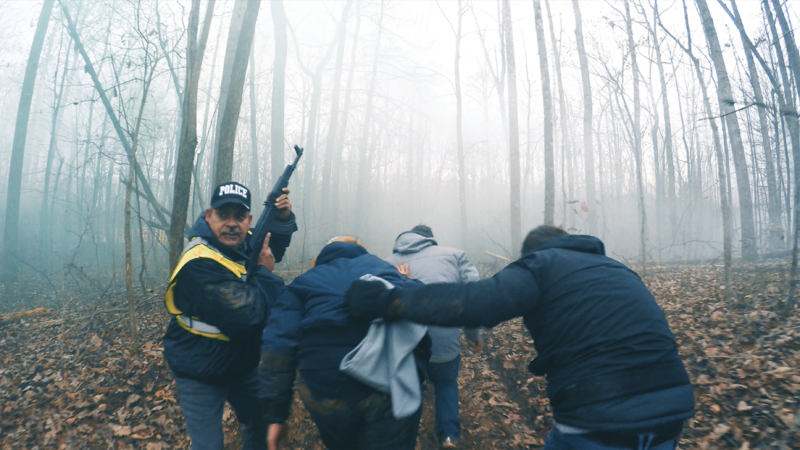
Routine never stays routine for long. A quick flight to inspect a supplier, a two-day client workshop or a maintenance visit to a remote facility can flip from predictable to perilous when demonstrations erupt nearby, a flash flood washes out roads or local power grids collapse. In moments like these, the margin for error shrinks fast and every decision carries higher stakes.
Risk professionals have a term for this volatility: emerging risks. As Gartner notes, “Emerging risks are defined as risks that do not currently have a significant impact on an organization but are characterized by high uncertainty, rapid evolution, and interdisciplinary nature.” When uncertainty becomes the norm, you need more than travel policies and insurance clauses to keep people safe and operations on track.
That is where Hostile Environment Awareness Training (HEAT) comes in. You will see exactly what HEAT entails, why it is moving from a niche concept to a board-level priority and how it strengthens duty of care, sharpens decision-making and bolsters your organization’s resilience when operating environments refuse to stay predictable.
Defining What Counts as a Hostile Environment
Cardinus explains that a hostile environment is any location where elevated risks to health, safety or security exceed what most travelers face day to day. Those risks can stem from political unrest, violent crime, terrorism threats, shaky infrastructure, extreme weather or limited healthcare. In other words, it is not just war zones that demand heightened vigilance and specialist preparation.
For your organization, that definition broadens the map dramatically. A factory in a region prone to hurricanes, a sales tour through cities experiencing civil unrest or an engineering project where emergency medical care is hours away all qualify as hostile environments once multiple risk factors converge.
Recognizing the Signals of Elevated Risk
Early warning signs range from rolling news of street demonstrations to sudden curfews, checkpoints popping up on main roads or a spike in kidnapping reports. Add unreliable transport links or hospitals running at capacity and it becomes clear that routine travel protocols no longer offer enough protection.
Cardinus stresses that when several of these indicators overlap, standard precautions break down fast. You should therefore assume conditions can deteriorate without notice and equip teams with the situational awareness, medical know-how and decision frameworks to adapt in real time.
Understanding Why Hostile Environments Are No Longer Rare Exceptions
Hostile environments exist on every continent, including pockets of the United States where natural disasters or social tensions can disrupt business overnight. Global supply chains, remote work and expansion into emerging markets mean more employees are exposed to volatile settings, even on short assignments.
Gartner classifies this volatility under the banner of emerging risks, which are uncertain, fast moving and cross-functional. Because past experience rarely predicts how these threats will unfold, proactive preparation through HEAT is becoming a leadership issue, not a back-office task.
Understanding Why HEAT Matters to Leadership and Business Performance
In volatile settings, risk management is inseparable from business performance. Hostile Environment Awareness Training equips you and your teams with the mindset, skills and judgment to protect people, sustain operations and make credible, values-aligned decisions when circumstances unravel.
Protecting People Through Credible Duty of Care
Duty of care has evolved far beyond booking compliant travel or distributing policy handbooks. Boards, insurers and employees now expect evidence that your personnel are genuinely prepared for foreseeable threats before they deploy. HEAT provides that proof point. By blending practical skills such as personal security, medical first response and stress management with decision-making frameworks, training transforms duty of care from paperwork into lived capability.
Imagine sending a field engineer to restore service after a cyclone. With HEAT under their belt, they have rehearsed evacuation planning, checkpoint etiquette and casualty stabilization under pressure. That preparation not only reduces exposure but also builds confidence, reassuring colleagues and families that you have taken every reasonable step to protect them.
Preserving Operations When Conditions Change Fast
As the National Safety Council explains in its Work to Zero report, “More than 5,000 workers tragically lose their lives on the job each year,” and serious incident rates remain stubbornly high despite overall safety improvements. This underscores the need to control hazards before they escalate.
Well-prepared personnel do exactly that. Teams trained through realistic HEAT scenarios recognize warning signs sooner, escalate concerns earlier and choose safer courses of action under stress. The result is fewer emergency evacuations, lower project delays and less reputational fallout when headlines turn negative.
Technology further reinforces this advantage. The National Safety Council adds that immersive training using virtual and augmented reality lets workers practice high-risk tasks in realistic yet controlled settings, building muscle memory without exposing anyone to unnecessary danger.
Breaking Down What Effective HEAT Training Should Cover
At its best, Hostile Environment Awareness Training is a decision factory. Instead of drilling purely tactical moves, it develops judgment, resilience and repeatable responses you and your field teams can draw on when the unexpected strikes. When participants leave a quality program, they know how to read the environment, act deliberately under pressure and keep missions moving even when conditions deteriorate.
Building Core Skills Before an Incident Happens
Robust HEAT programs begin with the fundamentals:
- Situational awareness that teaches people to spot changes in behavior, terrain or mood before trouble materializes
- Travel risk management and route planning that account for checkpoints, medical facilities and safe havens
- Personal safety habits that reduce visibility as a target and discourage opportunistic crime
- Communications discipline that keeps critical information secure while ensuring decision-makers stay connected to the field
- Operational security measures that protect data, equipment and personnel in fluid settings
- Pre-deployment planning that aligns trip objectives with contingency resources and clear escalation thresholds
You should see these competencies as performance multipliers. A project manager who can navigate a tense checkpoint without delay or a sales director who reroutes a team before a storm closes roads both protect revenue and reputation while keeping colleagues safe.
Practicing Responses Under Realistic Pressure
Theory alone rarely survives first contact with a real crisis. Scenario-based learning exposes participants to high-stakes situations such as checkpoint negotiation, armed aggressor response, casualty stabilization, emergency driving, detention survival and crisis-point leadership. By running these drills at pace, instructors convert abstract procedures into muscle memory and structured judgment that hold up under stress.
Immersive and controlled environments make the difference. Purpose-built training sites, mock villages and virtual reality modules allow your personnel to rehearse decisions under realistic sights, sounds and time pressure while instructors pause, review and refine performance. When teams later confront a real incident, the scenario feels familiar rather than overwhelming.
These capabilities set the stage for the next challenge: linking individual readiness to the wider systems that keep your organization resilient over time.
Embedding HEAT Into a Broader Risk and Resilience Strategy
Training delivers its greatest value when it plugs directly into the processes you already use to spot emerging threats, approve travel and manage incidents. HEAT should therefore sit alongside risk assessment, policy, real-time intelligence and after-action learning as part of a single operating model for resilience.
Connecting Training to Risk Assessment and Travel Governance
Before anyone books a flight, your organization needs a structured review of political advisories, local reporting, professional intelligence and the state of transportation and healthcare on the ground. These inputs help you decide whether to green-light, postpone or modify a trip and inform the specific HEAT modules travelers must complete. Clear approval workflows, escalation thresholds and communication protocols translate classroom lessons into practical guardrails. By documenting these triggers, and then rehearsing them in training, you make your duty of care defensible and your response times faster.
Reinforcing Preparedness Through Technology and Continuous Learning
Immersive simulations, eLearning refreshers and digital safety tools extend the shelf life of training. Virtual reality modules reinforce high-risk decision-making for distributed teams, while mobile apps push updated threat intelligence and micro-learning bursts to travelers in the field. Treat HEAT as a living capability, scheduling periodic refreshers, integrating lessons from after-action reviews and updating scenarios to reflect new threat patterns. This continuous loop keeps judgment sharp, policies relevant and your organization evolving as quickly as the risks it faces.
Choosing the Right HEAT Partner for Your Organization
Provider selection is more than a procurement exercise. The credibility of your HEAT partner shapes how confidently executives approve travel, how seriously employees engage with the curriculum and how effectively teams respond when events take a bad turn. Evaluating vendors through both a risk management lens and a workforce readiness lens ensures the program you choose will hold up under real-world pressure.
Evaluating Program Design, Credentials and Delivery Options
Before making an investment, compare providers against these four criteria:
- Real-world experience – instructors who have operated in complex environments, not just taught about them
- Alignment with recognized standards – course content mapped to frameworks such as ISO 31030 and awarding bodies like City & Guilds or the Institute of Leadership & Management (ILM)
- Scenario realism – purpose-built facilities, role players, stress-inoculation techniques and current threat profiles that replicate field conditions
- Delivery flexibility – programs that range from immersive residential courses to virtual modules and on-site adaptations for global or distributed teams
Recognized standards, certifications and rigorous adult-learning design give you and your stakeholders independent assurance that the curriculum meets best practice and delivers measurable outcomes.
Considering What Sigma7 Brings to HEAT Training
Here at Sigma7, we combine nearly five decades of in-country security experience with a training ecosystem that balances immersion, flexibility and accreditation. Our 85-acre simulation campus in Virginia hosts full-scale exercises featuring mock villages, militia checkpoints and armed aggressor scenarios, while our modern classroom spaces support reflective debriefs and leadership modules. For globally dispersed teams, we are the only HEAT provider that integrates video-game style virtual environments, micro-learning and live online coaching, making critical skills accessible without costly travel.
Mario Martinez, Global Safety, Travel and Security Advisor at Oxfam America, notes, “Sigma7 has always been our primary choice for providing HEAT courses.” With more than 6,000 participants trained across 75 countries, we have seen firsthand how rigorous preparation converts uncertainty into manageable risk.
Turning Preparedness Into a Strategic Advantage
Hostile Environment Awareness Training is more than an insurance requirement. It is a strategic investment that translates uncertainty into informed action, proving to partners, regulators and employees that your organization can deliver under pressure without compromising safety or ethics. When you champion HEAT, you demonstrate credible duty of care, empower teams to solve problems on the ground and safeguard continuity in markets where volatility is the norm. In short, preparedness becomes a competitive edge that strengthens brand trust and opens doors others deem too risky.
Ready to turn that edge into reality? Explore our upcoming Hostile Environment Awareness Training courses and reserve seats for your team on Sigma7’s events page. To discuss a tailored program that fits your risk profile, contact us directly. We are here to help your organization operate confidently, wherever the mission takes you.


