


Floods sweeping through production hubs, windstorms tearing at roofs and earthquakes rattling supply chains have moved from outlier events to routine line-items on the risk register. Around the world, organizations recalibrate business models to account for climate volatility and the knock-on effects that even a single damaged facility can send rippling through operations, customers and balance sheets.
Property risk engineering has emerged as a practical way to stay ahead of that curve. By combining site-level risk assessment with mitigation planning, organizations identify exposures and act before losses occur. The results can be profound. As NTI observes, “Risk engineering delivers real business benefits” and its clients have recorded 45 percent fewer claims alongside a 73 percent reduction in downtime after embracing the discipline. Underscoring the measurable return on proactive resilience efforts and disciplined follow-through on recommendations “Risk engineering delivers real business benefits”.
The pages that follow explore how a modern property risk engineering program typically works: defining the discipline, examining site-level assessments and translating natural catastrophe analyses into targeted mitigation and enterprise resilience. By unpacking these components, organizations can turn uncertainty into actionable priorities and strengthen performance during severe operational events.
Defining Property Risk Engineering in a Modern Risk Strategy
Property risk engineering is a structured, evidence-based discipline that identifies how threats to buildings, equipment and supporting infrastructure can cascade into business interruption, compliance breaches and financial loss. By combining engineering insight, data analytics and cross-functional collaboration, the practice turns technical findings into practical resilience guidance.
In the current era of climate volatility and complex, interconnected operations, the appetite for such rigor continues to rise. Stakeholders from boards to insurers increasingly expect demonstrable proof that organizations are not only aware of their exposures but are steadily reducing them. That expectation reshapes how risk leaders view the role of property risk engineering: not as a periodic audit but as an essential pillar of enterprise value protection.
Connecting Property Risk to Business Outcomes
The impact of a property event rarely stops at damaged walls or machinery. When a fire disables a key production line, the immediate repair bill is only the opening act. Lost revenue, missed customer commitments, expedited shipping costs and reputational fallout often follow. Insurance terms can tighten, deductibles may rise and alternative suppliers might have to be sourced at premium rates.
Consider a single distribution center that floods during hurricane season. Inventory becomes unsellable, regional deliveries stall and downstream facilities lose critical parts, forcing overtime spending or temporary shutdowns. In many industries, localized incidents can disrupt global supply chains within hours, increasing losses and delaying recovery.
Understanding these multilayered consequences is central to property risk engineering. By mapping how physical damage links to production bottlenecks, logistics dependencies and contractual obligations, organizations usually develop a fuller picture of value at risk. This information shapes smarter mitigation and continuity investments.
Positioning Risk Engineering as an Ongoing Capability
Treating risk engineering as a one-off inspection leaves blind spots. Instead, organizations usually gain the most value when they embed repeatable methodologies, schedule regular reviews and capture decisions in defensible documentation. CISA emphasizes consistent, well-documented assessment practices that decision makers can rely on for transparent comparison and planning documented, reproducible and defensible. These principles align with the continuous-improvement mindset underpinning mature programs.
Here at Sigma7, we reinforce that philosophy through scale and consistency. As our Property Risk Engineering team explains, “over 200 global risk engineers conduct over 6,000 surveys annually across 80+ countries,” ensuring a uniform lens on risk quality while tailoring insights to each location’s context “over 200 global risk engineers”. That repeatable framework gives business leaders comparable metrics across sites, making it easier to prioritize capital, demonstrate improvement to insurers and justify resilience budgets over time.
Examining Site-Level Risk Assessment for Better Visibility
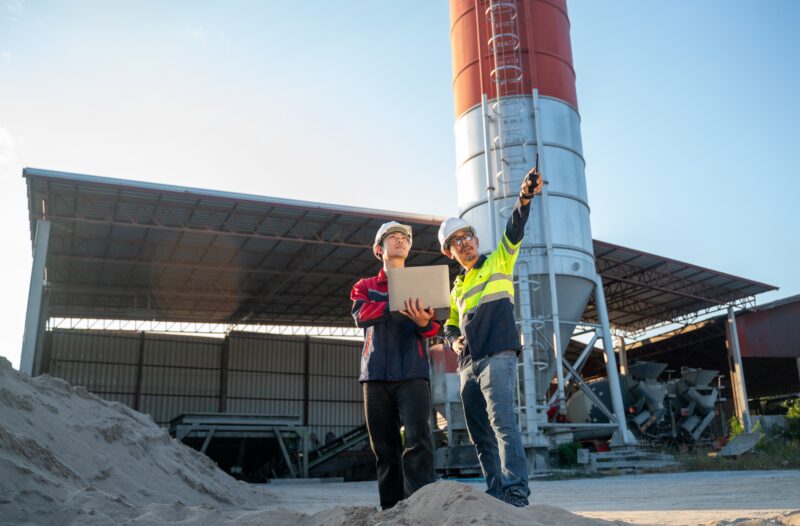
Comprehensive risk strategies rely on a ground-up view of each facility. A detailed site-level assessment explores how construction methods, occupancy profiles, protection systems and local hazards interact to influence loss potential. Independent infrastructure guidance recommends vulnerability surveys and visual screening techniques to identify security and resilience gaps. These tools also support planning and resource allocation. When findings appear in clear, reproducible reports, operational, finance and insurance teams share a common view of risk. This alignment streamlines funding discussions and speeds mitigation decisions.
A typical property risk assessment studies multiple dimensions of a site in concert:
- Building construction and age of critical structural elements
- Hazardous materials or processes that elevate ignition or explosion potential
- Fixed fire protection and detection systems in place
- Utilities, equipment dependencies and maintenance practices
- Management programs influencing human element controls and emergency readiness
Evaluating these factors together shows how overlapping weaknesses can increase loss severity instead of remaining isolated concerns.
Comparing On-Site, Remote and Self-Assessment Approaches
On high-value or operationally pivotal sites, in-person surveys remain the gold standard because engineers can verify protections, test equipment and speak directly with facility teams. Where travel is constrained, remote assessments leverage video walk-throughs, photo evidence and real-time interviews to capture critical data with minimal disruption. Lower-risk warehouses or offices often begin with structured self-assessment questionnaires that collect baseline information before further action is scheduled.
Evaluating Natural Catastrophe Exposure at the Facility Level
When organizations examine natural catastrophe exposure, they often discover that geography, building design and operational dependencies create markedly different risk profiles from one facility to the next. A coastal warehouse built below the 100-year flood elevation faces hazards that a hilltop data center will never encounter, while the data center may be more vulnerable to seismic activity or wind-borne debris. Linking these location-specific insights to emergency procedures, continuity planning and financial impact modelling turns static hazard maps into decision tools that shape budget and resource allocation.
Analyzing Flood, Wind and Seismic Vulnerabilities
A thorough site evaluation typically begins with the fundamentals:
- Flood risk: engineers compare finished-floor elevations to regional flood benchmarks, assess drainage paths and inspect barriers or flood-proofing features
- Wind exposure: roof geometry, cladding attachment and door or window strength are reviewed against mapped wind load expectations to gauge uplift potential
- Seismic resilience: assessments look for anchored equipment, braced piping, automatic gas shut-off valves and historical performance of similar structures in nearby fault zones
- Envelope integrity: the condition of roofs, walls and openings is correlated with maintenance histories to estimate likelihood of breach under extreme loads
- Redundancy of critical systems: backup power, water supply and communications capacity influence how quickly a site could resume operations after impact
The same hurricane-force gust can damage an aging facility while leaving a well-anchored neighboring plant largely untouched. This shows how design choices and maintenance often determine loss severity.
Assessing Operational Interdependencies Around NatCat Risk
Beyond the structure itself, natural catastrophe assessments usually account for the broader ecosystem that keeps a site productive: utility feeds, transportation corridors, supplier locations and workforce accessibility during regional disruptions. Scenario planning helps organizations assess how storms and extreme catastrophes could disrupt interconnected operations and extend downtime.
Independent infrastructure resources also describe web-based facility assessments and rapid visual screening techniques. These tools help teams evaluate building systems, benchmark sites and prioritize protective investments.
Prioritizing Mitigation Strategies That Strengthen Resilience
Turning assessment insights into action separates effective risk programs from thick reports gathering dust. After engineers identify vulnerabilities and quantify potential losses, leading organizations create phased roadmaps that balance prevention, protection and budget realities. High-impact items that cut frequency, severity or downtime usually receive early investment, while longer-term upgrades are sequenced to align with capital cycles and operational windows. Our experience shows that focusing first on the most significant risks delivers the greatest resilience returns, a pattern confirmed across numerous engagements.
Improving Protection, Prevention and Preparedness Measures
An assessment typically yields recommendations that fall into five complementary categories:
- Engineering controls that remove or isolate hazards
- Fire protection upgrades such as sprinkler density increases or enhanced detection coverage
- Natural hazard hardening including roof tie-downs, flood barriers or seismic bracing
- Emergency response improvements that sharpen detection, notification and on-site actions
- Continuity planning enhancements that strengthen redundancies, recovery sequencing and supply-chain work-arounds
When these measures align with a site’s most material exposures, organizations usually achieve both property protection and operational stability, mitigating losses while preserving productive capacity when events occur.
Using Data and Benchmarking to Set Priorities
CISA underscores that risk assessment data must remain documented, reproducible and defensible. Scoring models convert qualitative observations into quantitative indices, while benchmarking highlights how one facility compares with peers. These metrics make it easier to justify spend during annual planning, negotiate insurance terms and track improvement year over year.
For instance, our teams at Sigma7 use a quantitative risk assessment framework that scores every surveyed location and illustrates potential progress based on completing recommendations. Decision makers can immediately see which plants present outsized risk relative to revenue contribution or customer reliance, allowing budgets to flow where they will protect the most value. When those investments take hold, measurable indicators ranging from reduced claims to shorter recovery times feed back into the scorecards, closing the loop between engineering insight and business performance.
Recognizing the Business Benefits Beyond Loss Prevention
The upside of property risk engineering extends well past avoided repair bills. When leaders can verify the condition of every facility, understand the financial stakes of downtime and track improvements over time, they sharpen decisions that influence insurance terms, capital allocation and stakeholder confidence.
Strengthening Insurability, Efficiency and Stakeholder Confidence
CISA’s focus on defensible assessment criteria underlines the value of credible data. By adopting those principles, organizations create a common language for engineers, finance teams and underwriters, easing the path to favorable coverage and capacity. Clear, site-level data often reveals operational inefficiencies before they develop into claims, equipment failures or production delays. This insight helps maintenance and procurement teams make more informed and strategic decisions. At Sigma7, our 98 percent client retention rate reflects the trust organizations place in our services and recommendations. It also demonstrates how disciplined risk programs can strengthen long-term stakeholder confidence.
Internally, quantified risk scores translate engineering detail into metrics that boards and investors readily grasp. Externally, the ability to show year-on-year improvement reinforces a culture of stewardship that resonates with clients, regulators and community stakeholders alike.
Demonstrating Value Through Measurable Outcomes
Senior leadership often asks for proof that resilience investments pay off. Experience across multiple industries shows that disciplined programs can produce measurable results, including lower claims frequency and shorter recovery periods. These efforts also support more predictable long-term cost structures. NTI’s review found that a cohort of customers engaging its risk engineering services achieved “52 percent fewer experienced off-road days” while cutting overall claims counts nearly in half, an outcome that underscores how structured mitigation can translate directly into performance gains, per NTI.
From Sigma7’s vantage point, similar patterns emerge. When facilities address high-priority recommendations first, executives can track progress through quantitative scoring dashboards. Clear reporting also links completed projects with lower loss expectancies and smoother renewal negotiations. Those feedback loops cement the case for continued investment and make resilience a virtuous cycle rather than a sporadic expense. With the business value now in focus, the next consideration is how to weave property risk engineering insights into a cohesive enterprise-wide natural catastrophe planning framework.
Building a More Coordinated Natural Catastrophe Planning Framework
A natural catastrophe plan gains power when it unites site-level engineering insights with business continuity, disaster recovery and crisis-communication playbooks. Isolated binders of plant drawings or emergency contacts may satisfy compliance audits, yet they rarely capture the dynamic realities of modern supply networks. Integrating engineering findings with continuity teams, IT, procurement and executive leadership transforms static documents into living frameworks that evolve alongside the organization’s risk profile.
Here at Sigma7, we embed property risk engineering outputs directly into continuity workflows. After every survey, our engineers collaborate with operations and resilience leads to map recommendation timelines against production schedules, capital-planning windows and insurer expectations. The result is a single enterprise view of progress that bridges geography and business function.
Linking Site Findings to Continuity and Recovery Planning
Facility assessments often identify choke points, such as single transformer yards, sole-source suppliers and manual shutdown procedures, that influence how quickly critical operations recover after a crisis. Organizations use these findings to strengthen business continuity and disaster-recovery plans. Response teams then know which assets to protect, how to reroute workflows and when to activate alternate suppliers. Business-interruption analysis then assigns dollar values to downtime and operational disruption, helping leadership prioritize funding, address the most consequential vulnerabilities and measure returns on mitigation investments.
Supporting Global Consistency With Local Context
Multi-site enterprises benefit from standardized reporting templates, common scoring scales and centralized dashboards that make trends visible at a glance. Yet each facility still operates under local building codes, hazard profiles and workforce dynamics. Successful programs strike a balance: they set minimum global standards while allowing regional leaders to tailor implementation details. Cross-functional workshops involving engineering, finance, operations, safety and external partners often clarify priorities and responsibilities. Stronger coordination across teams can then improve follow-through on mitigation efforts.
With a coordinated framework in place, risk insights flow efficiently from the shop floor to the boardroom, paving the way for decisive action and sustained resilience gains.
Turning Risk Insight Into Greater Resilience
Property risk engineering, site-level assessments and targeted natural catastrophe planning share a single aim: converting uncertainty into informed action. Organizations that embrace these disciplines often protect assets more effectively and reduce financial surprises. They also strengthen confidence among employees, customers and investors.
Here at Sigma7, our global team of engineers and resilience specialists stands ready to help translate technical findings into practical strategies that safeguard operations, whether that means a deep-dive survey of a flagship plant, a remote review of satellite warehouses or a portfolio-wide benchmarking initiative.
Ready to strengthen resilience across your sites? Contact Sigma7 to discuss a tailored property risk engineering program that clarifies exposures, prioritizes investments and keeps your business moving when the next natural catastrophe strikes.


